Almost every quote conversation we have starts in the same place. The homeowner has been looking at photos for weeks, has a colour in mind, and wants to know which material to pick.
The honest answer is that all four of the common options can work on a Manitoba home, and all four can fail on a Manitoba home. The material matters less than most people expect. The install matters more.
That said, they are genuinely different, and the differences show up in cold weather, in maintenance, and in what the house looks like in ten years. Here is how we think about them.
The short version
- Vinyl is the budget friendly choice, and good vinyl properly installed does fine here. Thin vinyl badly installed is where the horror stories come from.
- Engineered wood gives you a deeper, more substantial look with real shadow lines, holds paint well, and takes an impact better than vinyl.
- Fibre cement is the most durable and the most dimensionally stable of the group, and it is also the heaviest and the most labour intensive to install.
- Steel is extremely tough and low maintenance, and it costs accordingly. It can dent, and a dent in metal is more visible than a dent in vinyl.
Now the detail.
Vinyl
Where it wins: Cost, colour selection, and zero repainting. It never needs a brush. It sheds water on its own. If your priority is a clean, uniform exterior at the lowest reasonable price, vinyl is a legitimate answer, not a compromise you should feel bad about.
Where it struggles in Manitoba: Cold makes vinyl less forgiving. In deep winter a thin panel is far more likely to crack than dent when something hits it. Ice sliding off a roof, a shovel, a stone off a mower, a puck in the driveway.
Vinyl also moves the most of any material on this list, so it is the least tolerant of a rushed install. Panels have to hang loose on their fasteners with clearance at the ends, and those clearances change with the temperature on install day. Get that wrong and you get wavy walls in July or open joints in January.
What we would insist on: A thicker premium grade panel with a solid nail hem, not builder grade. Dark colours need extra thought, since they absorb more heat and move more.
Best for: Rentals, budget conscious full re-sides, garages and outbuildings, and homeowners who want the lowest maintenance option available.
Engineered wood
Where it wins: Looks. Engineered wood lap has real thickness at the butt edge, which throws a proper shadow line and reads much more like traditional wood siding than vinyl does. It holds paint well, comes prefinished or paintable, and it is significantly more impact resistant than vinyl in cold weather.
It is also lighter and easier to cut than fibre cement, which keeps labour costs below fibre cement while getting you most of the way there on appearance.
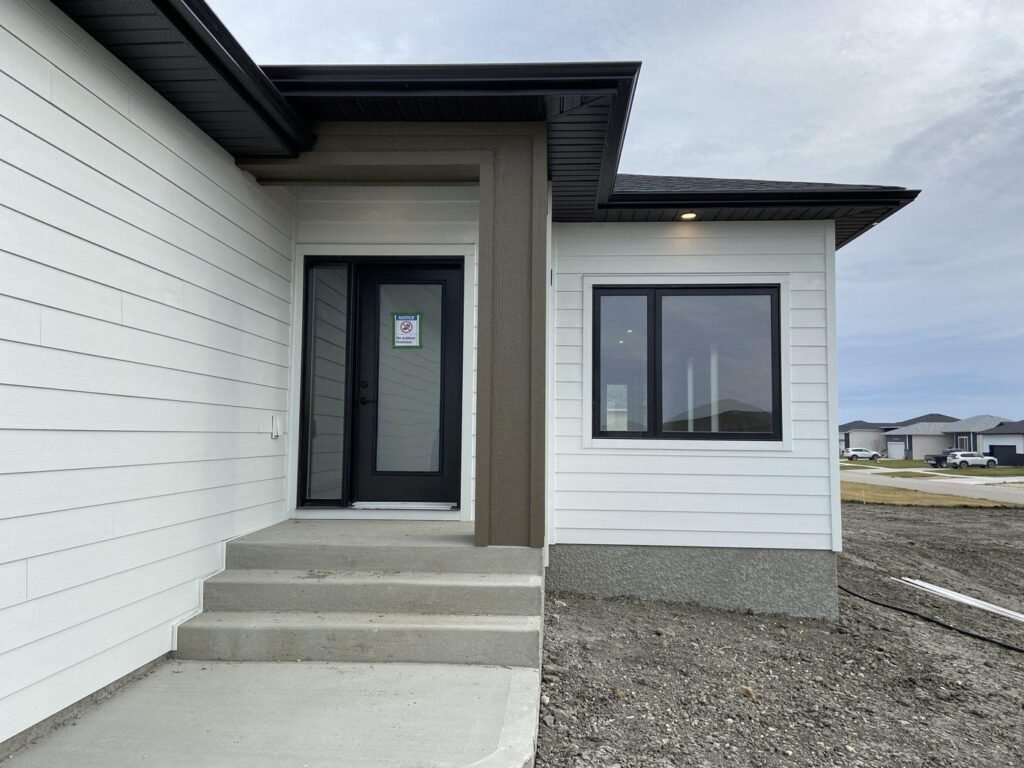
The shadow line at the butt edge is what separates a substantial looking wall from a flat one.
Where it struggles: It is a wood based product, so water management is not optional. Cut edges need to be sealed. Ground clearance and clearance above roof surfaces have to be respected. Flashing has to be right. If the installer treats it like vinyl, it will not perform like it should.
What we would insist on: Every cut edge finished, correct clearances, and proper flashing at every transition. This product rewards a careful crew and punishes a fast one.
Best for: Homeowners who want the look of real wood siding with less upkeep, and who plan to stay in the house.
Fibre cement
Where it wins: Durability and stability. It does not go brittle in the cold the way thin vinyl does, it barely moves with temperature, it will not burn, and insects have no interest in it. Factory finishes hold colour for a long time. Of the four, it is the one most likely to still look right in twenty years.
Where it struggles: Weight and labour. It is heavy to handle, it needs specific blades and dust control to cut, and installation is slower. That shows up in the price. It also needs correct fastening and gapping, and it is not a product to hand to a crew that has not installed it before.
What we would insist on: Proper cutting practice and dust control, correct fastener type and spacing, and flashing and clearances exactly to spec. Manufacturer warranties on these products are tied to install method, so cutting corners can cost you the warranty as well as the wall.
Best for: Forever homes, high exposure walls, and homeowners who want the most durable option available and are willing to pay for the labour it takes.
Steel and aluminum
Where it wins: It is the toughest surface on the list. It will not crack in cold, it will not rot, it will not burn, and modern finishes are excellent. Maintenance is close to nothing.
Where it struggles: Cost is at the top of the range. It can dent from hail or impact, and dents in a flat metal panel are more noticeable than damage in a textured product. Repairs generally mean replacing a panel rather than patching one.
Best for: Modern designs, commercial and agricultural work, and accent walls where you want a look nothing else gives you.
Mixing materials is usually the right answer
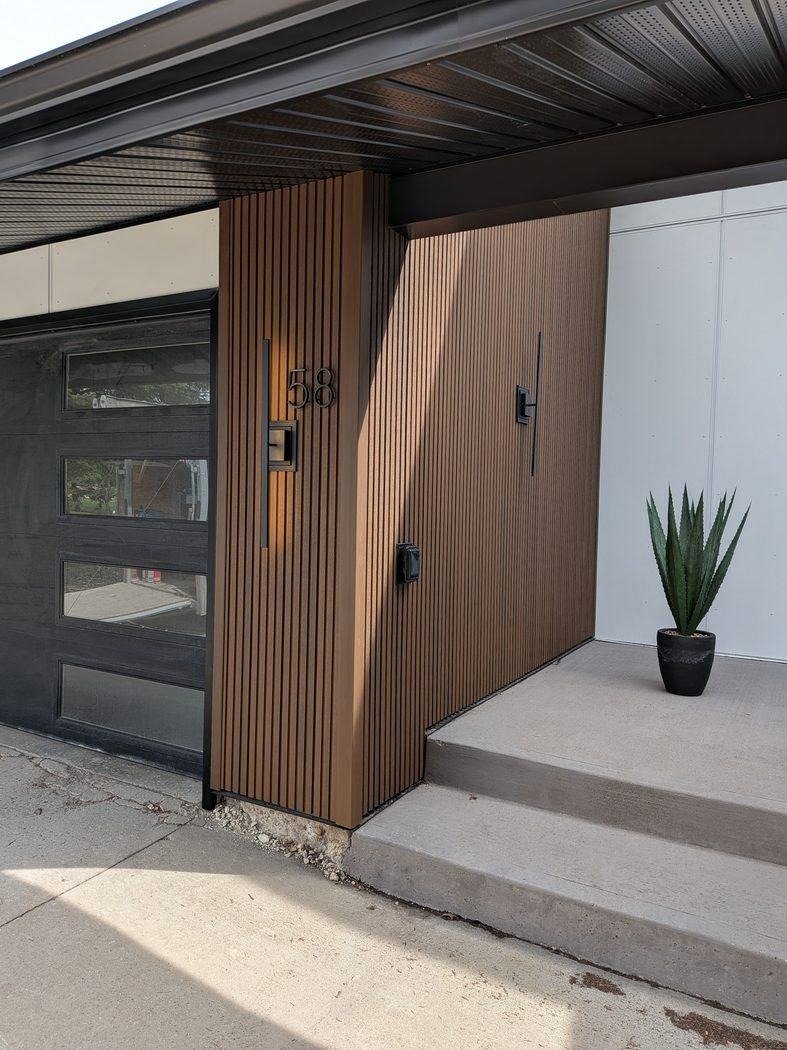
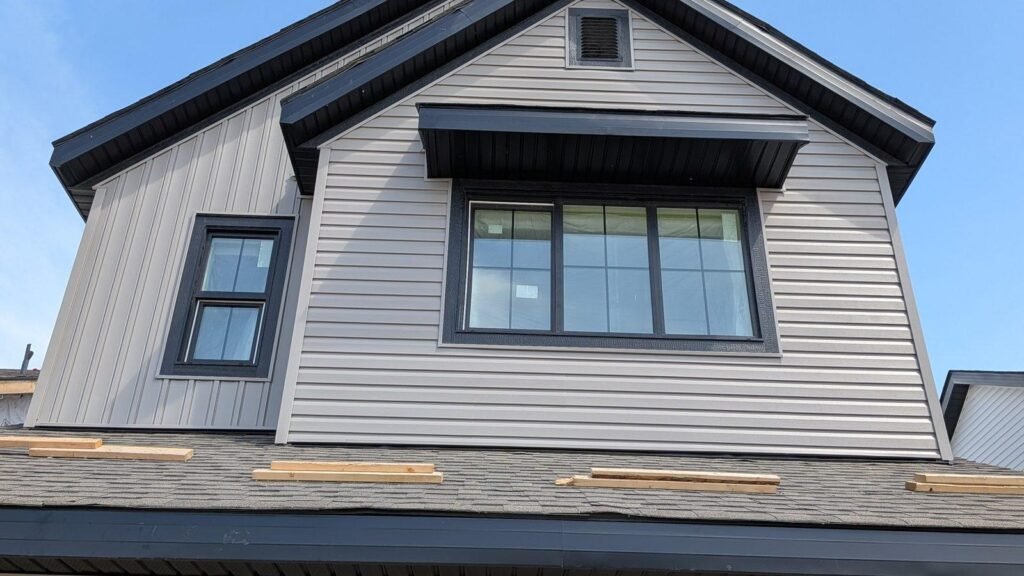
The exteriors people stop and look at rarely use one product on the whole house. A typical combination that works well here: horizontal lap on the main body of the house, vertical board and batten in the gables or on a front feature wall, and a warm wood tone or slat panel accent in a protected spot like an entry alcove.
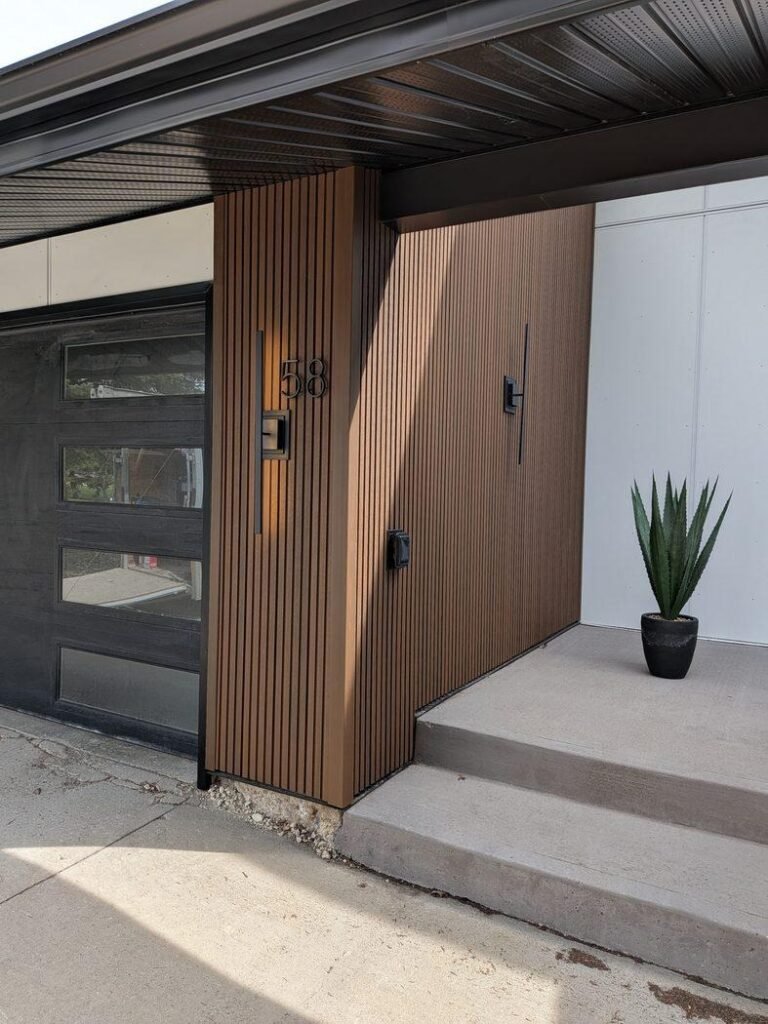
A protected entry alcove is the right place to spend on an accent material.
That does three things. It breaks up large flat walls, it gives the front elevation a focal point, and it lets you spend the premium material budget where it will actually be seen instead of spreading it evenly across the back of the garage.
Colour holds up differently here
Two things worth knowing before you fall in love with a swatch.
Dark colours absorb heat, which means more expansion and contraction, and on some materials more fade over time. That does not rule them out. Dark grey and near black exteriors look excellent and we install plenty of them. It just makes the quality of the product and the install more important, not less.
And look at your samples outside, on the actual wall, at two different times of day. Manitoba light is bright and flat in winter with a lot of snow bounce, and much warmer in the evening in summer. A grey that reads cool and modern in a showroom can read blue on a north wall in February.
What we would put on our own house
Engineered wood or fibre cement lap on the body, board and batten in the gable, and no compromise on flashing, house wrap, or trim.
If the budget does not reach that, we would rather install a premium vinyl properly than a premium product carelessly. A good install of a mid grade material will outlast a bad install of an expensive one every time. That is not a sales line, it is just what we see when we tear walls off.
Talk it through with someone who will be on the job
We will bring samples, look at your house, tell you what suits it, and be straight with you about where it is worth spending and where it is not.