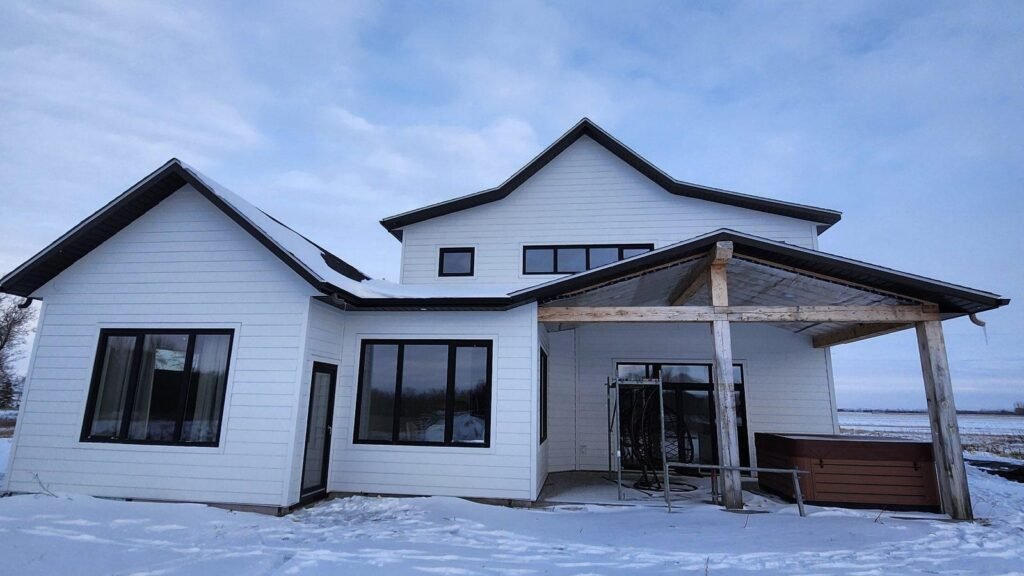
Every siding job in Manitoba gets tested twice a year. Once in January, when the wall is cold enough to make plastic behave like glass. Once in July, when the same wall has expanded and the sun is beating on the south face all afternoon. A siding job that only works in one of those two conditions is not finished. It is just waiting.
We get called out to a lot of walls that are five to ten years old and already failing. Almost none of them failed because the homeowner picked the wrong colour. They failed because somebody was in a hurry.
Manitoba asks more of a wall than most places
A Winnipeg home lives through a temperature swing of roughly 70 degrees Celsius across the year, plus wind that drives rain and snow sideways into every seam, plus freeze and thaw cycles in spring and fall that happen within a single day.
Every material on your exterior moves with that. Vinyl moves a lot. Engineered wood and fibre cement move less. Metal moves somewhere in between. The job of a siding installer is not just to hang panels. It is to leave the wall enough room to move where it needs to, and no room at all where water is concerned.
That is the whole trade, really. Everything below is a version of that one idea.
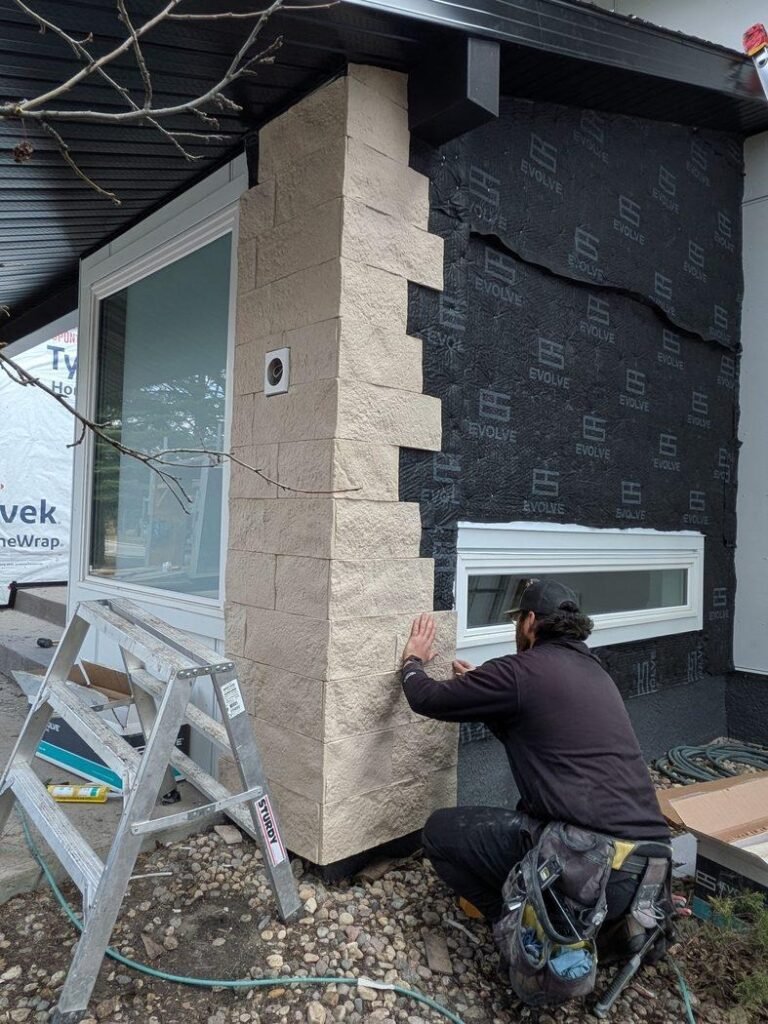
The layer that actually keeps water out of your wall is the one you never see again.
What actually fails
Thin panels go brittle in the cold
Budget vinyl is thin vinyl. In summer, thin panels flex and you never notice. Below about minus 20, that same panel loses its give. A hockey puck, a shovel handle, a chunk of ice off the roof, or a stone thrown up by the mower is enough to crack it instead of denting it.
Thicker panels with a proper nail hem hold up better, and so do engineered wood and fibre cement products, which do not go brittle the way thin vinyl does. Cracked panels also tend to crack in the middle of a wall, not conveniently at the corner, so the repair is never invisible.
Wavy, buckled walls
If a panel is fastened with no room to expand, it has nowhere to go when the wall heats up. It pushes against the piece next to it and the whole course bows outward. You see it best standing at the corner of the house and sighting down the wall in strong side light.
That waviness is not a material defect. It is an installation defect, and it is permanent unless the wall comes off.
Fasteners driven tight
Siding is meant to hang, not to be pinned. On a lap system the fastener goes through the nail slot, centred, and stops just short of snug so the panel can still slide. Drive it tight and you have created the exact problem above.
This is the single fastest corner to cut on a siding job, because a nail gun set hot lets a crew move across a wall much faster. You cannot see it once the next course goes on. You can hear it two winters later.
Gaps that were measured in the wrong season
Panels need clearance where they meet trim, corners, and channels, and that clearance depends on the temperature the day the crew is on site. A panel cut for a summer install and one cut for a November install are not the same length. Ignore that and you get either buckling in the heat or open joints in the cold with daylight showing through.
Nothing behind the siding
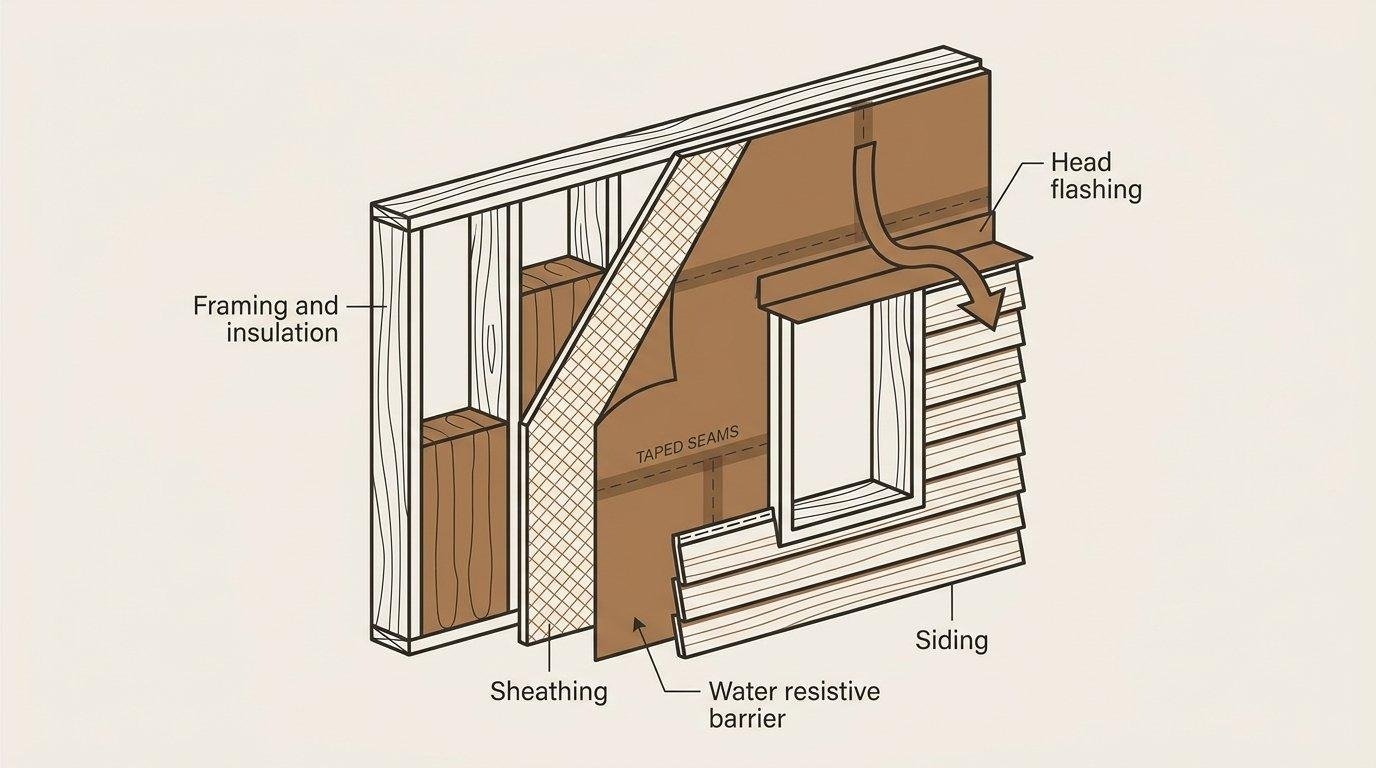
Siding is not waterproof. It is the first layer of a system. Behind it there should be a proper water resistive barrier, taped and lapped so water runs down and out, plus flashing over every window, every door, and every place the wall changes plane.
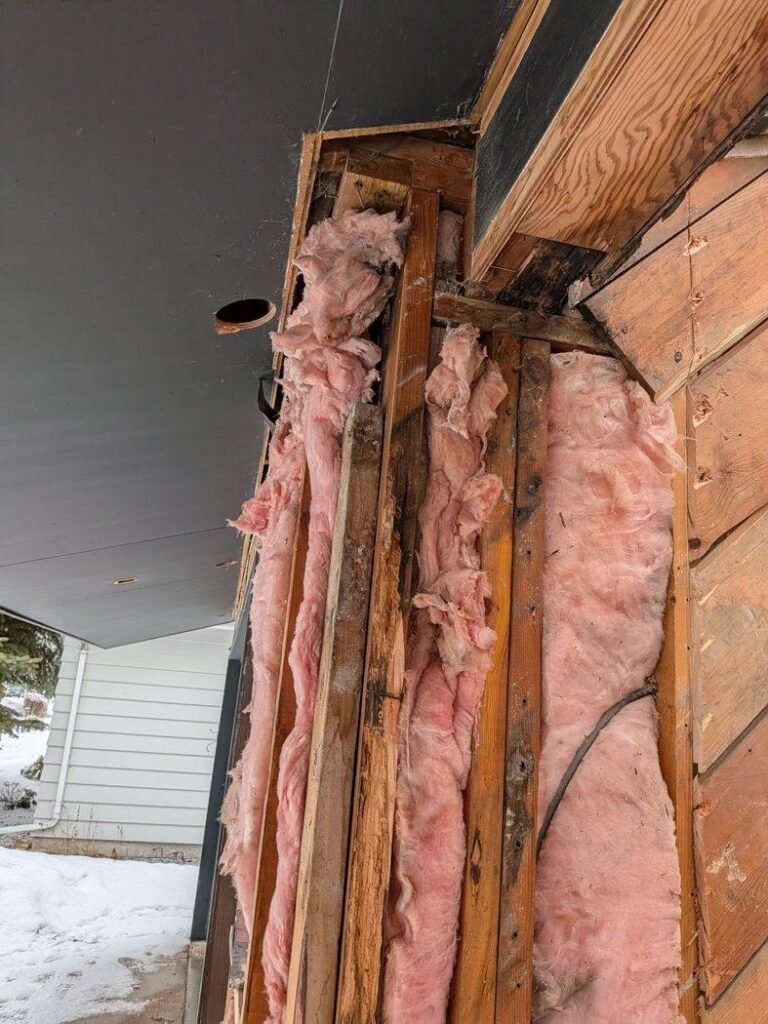
What a wall looks like once the siding comes off. Water got in here years ago.
When we open up a wall that is leaking, the siding is usually intact. What we find is house wrap that was stapled up loose and never taped, or a window with no head flashing, or a deck ledger bolted straight through with nothing over it. Water got in years ago and has been quietly working on the sheathing ever since.
That is the part a cheap quote leaves out, because you cannot see it in the finished photos.
The details that make a wall last
None of these are exotic. They are just slower.
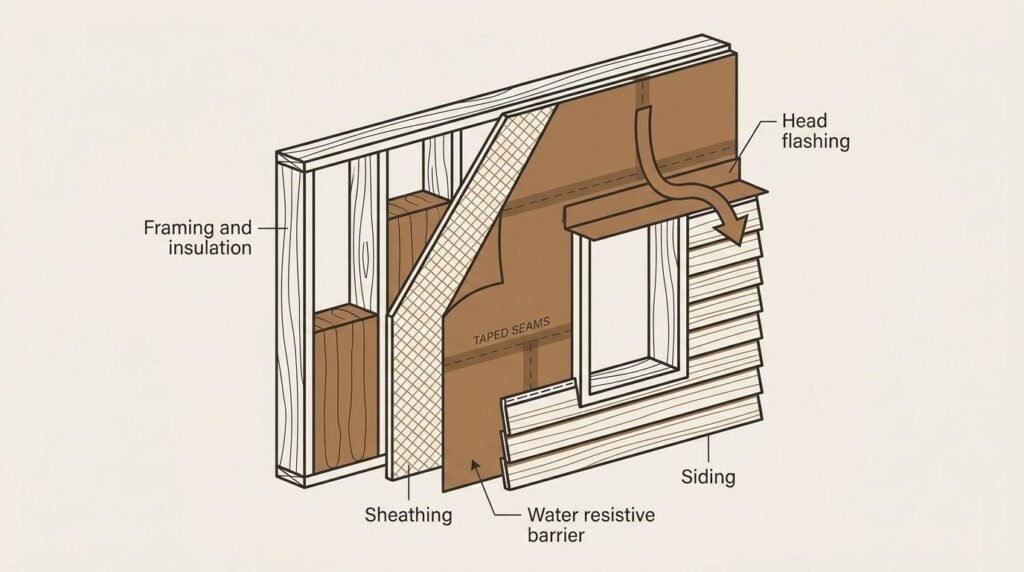
A wall that is built to shed water: barrier taped, flashing over the opening, siding hung on top.
- Full tear-off where it is warranted, so the sheathing gets inspected instead of covered up
- A water resistive barrier that is lapped and taped, not stapled and hoped for
- Flashing at every penetration and every horizontal transition, installed to shed water outward
- Rotten sheathing replaced, not sistered over
- Fasteners in the slot, centred, and left loose so panels can move
- Seasonal expansion gaps measured for the day the wall is being built
- Trim and channel work cut clean, because that is where wind driven water finds its way in
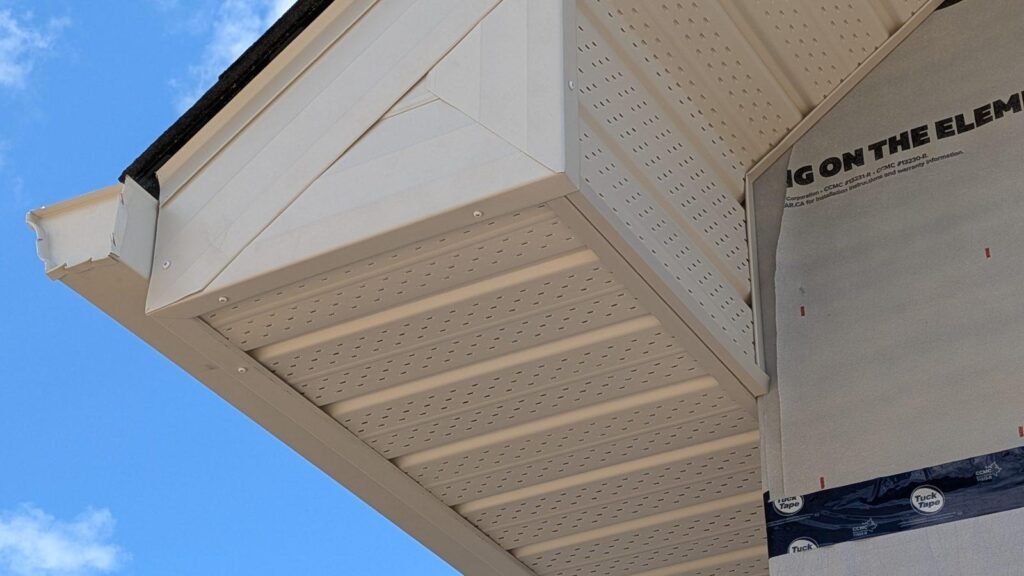
- Soffit, fascia, and eavestrough treated as part of the same system, since a roofline that dumps water down the wall will beat any siding
Why we do fewer houses on purpose
K & V Projects is a small crew, and that is deliberate. Vlad is on site. The person who quoted your house is the person watching the flashing go on. We do not run three crews across the city and hope the details got done.
That means we are not the cheapest quote in your inbox. It also means we are not back in your driveway in three years explaining why a wall is wavy.
Our promise on every job is simple: we will not leave until you are happy with it.
Getting a straight answer about your wall
If your siding is cracking, buckling, letting water in, or just past its life, the useful first step is not a price. It is a look at what is actually going on behind it.
We will come out, walk your exterior with you, tell you honestly whether you need a full re-side or a repair, and put a written quote in your hands with the whole scope on it.